
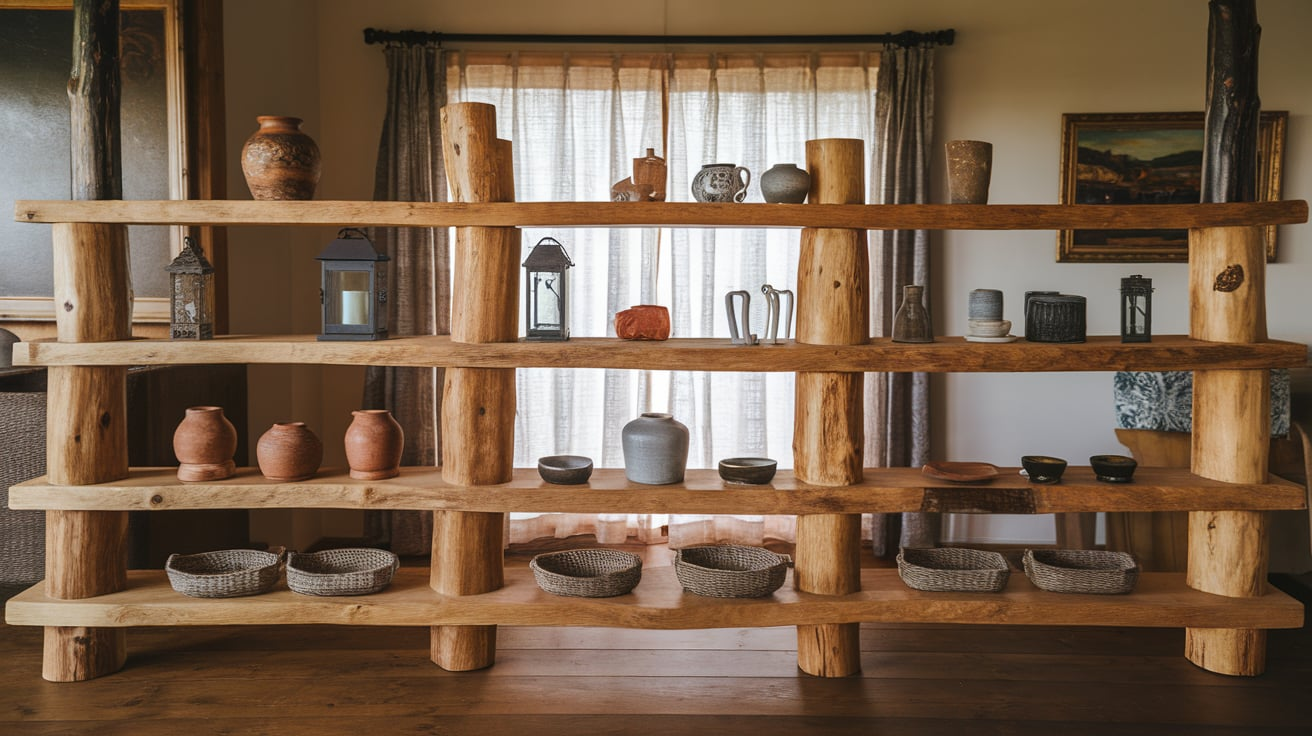
When it comes to transforming a room without swinging a hammer or committing to a full renovation, wooden room dividers are your best friend.
They’re stylish, functional, and can instantly change the vibe of a space. Whether you’re working with a tiny studio, a large open-plan home, or just craving a cozy corner, a divider does the magic.
1. Wooden Slat Dividers for Modern Minimalism
Wooden slat dividers are sleek, airy, and timeless. Picture thin vertical or horizontal slats arranged with just enough gap to let light flow through. They create division without isolation.
These are especially popular in Scandinavian and Japandi interiors, where minimalism meets warmth.
In open-plan living rooms, slats can separate the lounge from the dining area while keeping sightlines open. I once stayed at an Airbnb in Copenhagen where the wooden slat divider doubled as an art piece—it looked like a sculptural installation. The beauty is they’re not heavy, so your space never feels boxed in.
2. Folding Wooden Screens for Flexibility
The classic folding screen is the OG of room dividers. Portable, lightweight, and collapsible, they can be tucked away when not needed. What makes them special today is the variety of designs—from vintage carved teak to modern geometric oak panels.
For small apartments, these are a godsend. Need a makeshift dressing area? Pull the screen out. Hosting guests in a studio? A folding screen gives privacy in seconds. According to a 2023 Houzz survey, 41% of renters prefer folding dividers because they don’t alter the structure of the home.
3. Carved Wooden Dividers for Artistic Flair
If you want your divider to double as a statement art piece, carved wooden dividers are unmatched. Intricate floral, mandala, or lattice patterns instantly elevate the aesthetic. They’re often used in Bohemian, Indian, or Moroccan-inspired homes.
One friend of mine has a carved mango wood divider that casts dreamy shadows when the sunlight hits. It doesn’t just divide space—it transforms the mood of the room. If you’re worried about dusting those little nooks, here’s a trick: use a handheld vacuum brush weekly.
4. Wooden and Glass Combination Dividers
Sometimes you want privacy but also don’t want to block all the light. A wood and glass hybrid divider strikes the balance. Think of a wooden frame with frosted or clear glass panels. It gives definition while keeping spaces visually connected.
These are perfect for home offices. Instead of feeling shut in, you get natural light filtering through. The bonus? Glass makes rooms feel bigger, while wood keeps the warmth intact.
5. Bookshelf Wooden Dividers
This one’s a double win: storage plus separation. A bookshelf-style divider not only creates zones but also gives you a place for books, plants, or decorative pieces. It’s especially handy in small apartments where every inch counts.
A friend in New York swears by her custom oak bookshelf divider—it separates her living area from her bedroom while showcasing her plant collection. It’s like walking into a mini jungle library.
6. Sliding Wooden Dividers
If you want flexibility but also a permanent vibe, sliding dividers are the way to go. They work like pocket doors or barn doors but in lighter, slatted wood. You can open them fully to merge spaces or slide them shut for privacy.
This design is popular in Japanese interiors, often using Shoji-style wooden frames with paper or fabric inserts. The smooth sliding motion feels satisfying, almost like drawing curtains but sturdier.
7. Wooden Lattice Dividers
A lattice-style divider adds a touch of geometry and elegance. They’re often used in transitional or classic interiors. The open weave allows air and light to pass through, making them ideal for dividing living and dining spaces.
Lattice also adds an ornamental feel. For example, in a friend’s farmhouse, a whitewashed lattice divider separates the kitchen from the mudroom, giving off that cozy country vibe.
8. Rustic Barn Wood Dividers
For a more rugged charm, barn wood dividers bring in texture and nostalgia. Reclaimed wood tells a story through its grains and imperfections. It’s a divider and a conversation starter.
Rustic dividers work wonders in farmhouse or industrial interiors. Pair them with metal accents or vintage lighting, and you’ve got a cozy yet edgy setup. Bonus: they’re eco-friendly if you use salvaged wood.
9. Wooden Planter Dividers
If you love greenery, combine your divider with planters. A wooden frame with built-in planter boxes lets you create a living wall divider. It’s perfect for city apartments where outdoor gardens aren’t an option.
I once visited a café that had tall wooden planter dividers with trailing pothos and ferns—it felt like dining in a greenhouse. Studies even show indoor plants improve air quality and reduce stress, so this is both pretty and practical.
10. Wooden Beaded Curtain Dividers
For a playful and retro vibe, try wooden bead curtains. They don’t completely block space, but they create a sense of separation with texture and movement.
They’re nostalgic—reminding me of my aunt’s home in the 90s where every doorway had wooden bead curtains. Today, they’re making a comeback, especially in boho and eclectic interiors.
11. Tall Wooden Panel Dividers
Sometimes you need full-on privacy. That’s where floor-to-ceiling wooden panels shine. They’re bold, solid, and make a strong architectural statement.
Tall panels work well in open lofts or large living spaces. They can also double as accent walls if you choose textured or patterned wood. Just make sure they don’t overwhelm the space—lighter finishes help keep the balance.
12. Wooden Rope Hybrid Dividers
Mixing wood with rope creates a unique nautical or rustic vibe. Wooden frames strung with rope can divide spaces without making them feel heavy.
I saw this in a coastal Airbnb—rope threaded vertically between wooden beams. It felt airy, playful, and tied into the beach aesthetic perfectly. This type of divider is DIY-friendly too.
13. Wooden Grid Dividers
A grid-style divider offers symmetry and order. Imagine square or rectangular compartments forming a partition. These can be left open or filled with glass, fabric, or even plants.
They’re great for modern and contemporary spaces. A grid divider with black wood framing, for instance, instantly gives an industrial loft aesthetic.
14. Wooden Shutter Dividers
Repurposed shutters are a budget-friendly yet chic option. Paint them, distress them, or leave them raw for a rustic vibe. Hinged together, they create a charming divider that’s easy to move.
I once DIYed this using old pine shutters I found at a flea market. A coat of pastel paint later, they became a quirky divider for my craft room. Guests always comment on how unique it looks.
15. Wooden Chevron Pattern Dividers
Patterns make a divider pop, and chevron wood dividers bring a bold geometric statement. The angled planks create visual movement that makes the divider feel like artwork.
These suit modern, mid-century, and even eclectic spaces. A walnut chevron divider can instantly make a dull living area feel designer-approved.
16. Wooden Partition with Hidden Storage
If you’re short on space, look for a divider that doubles as hidden storage. Think slim cabinets, cubbies, or drawers integrated into the wooden frame.
This is especially handy in compact homes. One clever hack I’ve seen: a wooden divider with hooks on the backside for coats and bags, doubling as an entryway organizer.
17. Rustic Log Slice Dividers
Want something truly unique? A divider made from log slices creates a striking natural texture. Each slice shows off its rings, making it a piece of nature indoors.
These work well in cabins, rustic homes, or nature-inspired interiors. When sealed properly, they’re durable and add earthy warmth.
18. Wooden Divider with Fabric Inserts
Combine wood with soft fabric panels for a cozier vibe. The fabric can be neutral linen for minimalism or bold prints for drama.
It’s like blending furniture and drapery. Plus, the fabric is easy to swap out if you want to change your room’s look seasonally.
19. Suspended Wooden Dividers
Instead of starting from the floor, imagine wooden panels hanging from the ceiling. These suspended dividers look modern and airy, almost like floating walls.
They work especially well in high-ceilinged homes or lofts. The suspension gives a sense of openness while still zoning areas.
20. Geometric Wooden Dividers
Go beyond basic slats or panels with geometric patterns—hexagons, triangles, or asymmetric shapes. These add a playful, contemporary twist to any room.
A friend has a hexagonal divider in her art studio, and it feels like walking through a honeycomb every time. It’s functional and fun at once.
21. Wooden Divider with Lighting
Adding built-in lighting transforms a divider into a glowing feature. LED strips or backlighting behind wooden slats or panels create an ambient glow.
In dim living rooms, a lit divider acts like a modern lantern. It’s functional by day, atmospheric by night.
22. Curved Wooden Dividers
Who said dividers have to be straight? Curved wooden dividers soften the look and add architectural interest. They’re rare but impactful.
They work well in creative studios or modern homes where design plays a big role. A curved oak divider can feel almost sculptural.
23. Reclaimed Wooden Pallet Dividers
For budget-friendly and eco-conscious design, pallet wood dividers are unbeatable. With sanding, staining, or painting, pallets can be repurposed into charming rustic partitions.
They’re DIY-friendly, making them perfect for renters or anyone on a budget. Plus, each pallet’s imperfections tell a story.
Conclusion
Wooden room dividers aren’t just functional barriers; they’re tools for storytelling in your home.
From sleek slatted dividers that whisper modern minimalism to carved masterpieces that shout artistic flair, each choice changes how your space feels and functions.
The versatility is unmatched—you can find one that suits a studio apartment, a farmhouse, or a contemporary loft.