
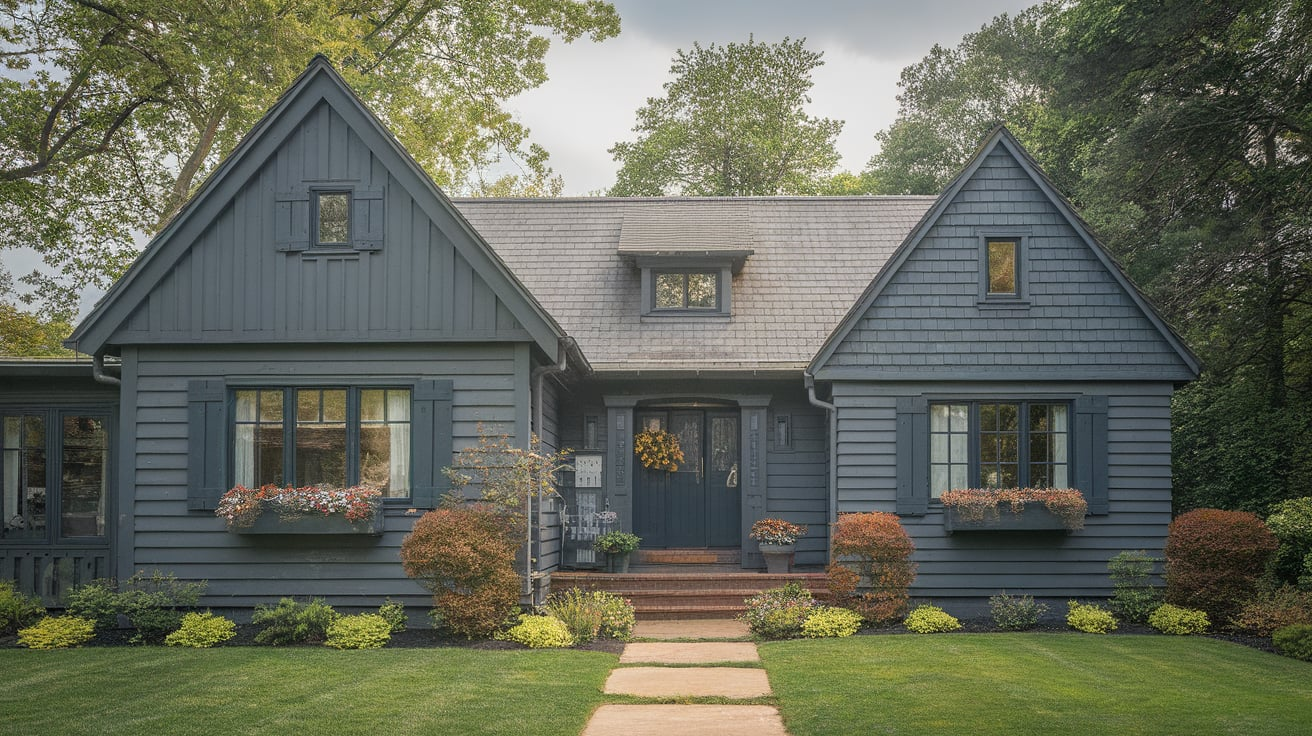
Grey is one of those timeless colors that quietly sneaks into the spotlight without even trying.
It’s not loud like red, it’s not overused like white, and it’s not as moody as black.
Grey sits comfortably in that sweet spot between sophistication and versatility.
When it comes to exterior house colors, grey has become a favorite for homeowners because it adapts to modern, traditional, farmhouse, coastal—you name it.
1. Light Dove Grey
If you’ve ever admired homes that look crisp, clean, and welcoming without being stark white, chances are you’ve seen a light dove grey. It’s a gentle grey with warm undertones that softens the exterior while still looking fresh.
This color works especially well on cottages, ranch-style houses, or bungalows where you want charm without heaviness. Pair it with white trim and a black front door for contrast.
I used this shade when helping a friend redo their fixer-upper, and it instantly made the house look like it had been pulled straight out of a Pinterest board.
2. Charcoal Grey
Charcoal grey is bold, moody, and dramatic. It’s not quite black, but it carries the same weight and richness. If you live in a modern neighborhood or own a contemporary-style home, charcoal grey makes your house look architectural rather than just “painted.”
According to a Zillow study, darker exterior colors like charcoal can increase perceived home value by up to $6,000 because they give off a luxurious vibe. Combine it with wood accents (like cedar shingles or a wooden garage door), and you’ve got instant curb appeal that feels expensive without being flashy.
3. Warm Greige
Greige—that magical marriage between grey and beige—offers the best of both worlds. It’s not too cool, not too warm, but somewhere perfectly balanced. This is a great pick if you’re worried about your house looking too cold.
Warm greige pairs beautifully with brick or stone detailing. I once saw a farmhouse painted greige with creamy trim and black shutters, and it looked straight out of a country lifestyle magazine. It’s a color that adapts with the light—appearing soft beige in the morning sun and elegant grey in the evening shade.
4. Slate Grey
Slate grey has a touch of blue mixed in, making it ideal for coastal homes or houses near water. Think Cape Cod charm meets modern coolness.
This color feels calm and stable, which is why it’s often associated with classic, long-lasting design. Pair slate grey siding with white trim and maybe even a red front door if you’re feeling bold. The combo gives a pop of personality while keeping things balanced.
5. Cloud Grey
For those who love minimalist, Scandinavian-inspired homes, cloud grey is your friend. It’s pale, airy, and almost drifts into off-white territory.
When paired with black-framed windows, cloud grey creates that clean, modern farmhouse look you’ve probably pinned on Pinterest. A neighbor down my street painted their craftsman-style home in this shade, and it looks like a modern take on a fairytale cottage.
6. Graphite Grey
Graphite grey is sleek, urban, and incredibly modern. It works best on angular, geometric homes that already have a minimalist design.
Builders and architects love this shade because it provides a neutral canvas for natural accents like stone, glass, or wood. The contrast makes these elements pop. If you live in a city or suburban neighborhood with newer builds, graphite grey will give your house that polished, “architect-approved” look.
7. Smokey Grey
Smokey grey has a slight softness to it—like a gentle fog rolling over the mountains. It doesn’t scream for attention, but it still makes a strong impression.
This shade looks particularly beautiful on colonial and craftsman homes. Add in white or navy trim for definition. The nice thing about smokey grey is that it hides dirt better than lighter shades, which is handy if you live in a dusty or rainy climate.
8. Steel Grey
Steel grey has a subtle industrial edge. It’s darker than mid-grey but lighter than charcoal, creating a balanced tone that feels strong and dependable.
It looks incredible when paired with metal roofing, stone facades, or black shutters. If you’ve ever admired modern cabins or mountain lodges, chances are they leaned on steel grey for that rugged yet refined appearance.
9. Silver Grey
Silver grey reflects light beautifully, making it a great choice if your house gets plenty of sun. It’s sleek, modern, and has just enough shimmer to stand out without being too flashy.
Silver grey pairs nicely with bright white trim and navy doors. I’ve seen it used on both beach houses and city townhomes, and it adapts flawlessly. The reflective quality of silver grey can even make your home appear larger from the street.
10. Ash Grey
Ash grey carries a slight earthy undertone, making it look grounded and natural. If you have lots of landscaping, this color blends beautifully with greenery.
One of my favorite combinations is ash grey siding with natural stone and dark wood beams. It feels both rustic and elegant, like a mountain retreat that still belongs in the suburbs.
11. Soft Pewter Grey
Pewter grey is timeless and classic. It falls somewhere between silver and charcoal, giving it flexibility to work with almost any architectural style.
This shade shines when accented with burgundy or forest green doors. My aunt painted her Victorian home in pewter grey, and it gave her century-old house a refreshing yet historically respectful update.
12. Storm Grey
Storm grey has depth and drama, with hints of blue or green depending on the light. It’s moody without being overpowering.
If you live somewhere with a lot of rainfall, storm grey can give your home a romantic, storybook feel, as if it was designed to weather storms gracefully. Pair it with copper gutters or lanterns for an extra touch of character.
13. Misty Grey
Misty grey is soft and slightly cool, almost like a watercolor wash across your siding. It feels refreshing and calm.
This shade works beautifully for bungalows, beach houses, or mid-century modern homes. If you love understated elegance, misty grey will give your home that peaceful, welcoming look.
14. Urban Grey
Urban grey has a modern, industrial edge to it. It’s slightly darker than medium grey but not as deep as graphite.
I’ve seen this shade paired with brick accents in downtown neighborhoods, and the contrast looks phenomenal. Urban grey keeps your house looking trendy without making it feel like it’s trying too hard.
15. Cool Concrete Grey
Concrete grey is minimalistic and edgy, perfect for modern architecture. It’s a practical shade that hides wear and tear, making it a low-maintenance option.
Concrete grey works best when paired with matte black trim and glass elements. It’s the kind of color that says, “I care about design, but I’m not fussy.”
16. Blue-Tinted Grey
Adding a touch of blue to grey creates a refreshing, coastal-inspired look. This is perfect for seaside homes or those who just want a breezy vibe.
A friend painted their lake house in this shade with white shutters, and it instantly felt like a vacation property—even when they weren’t on vacation. Blue-tinted grey is a great way to add personality without straying too far from neutral.
17. Taupe-Grey
Taupe-grey leans warmer, giving off a cozy yet sophisticated vibe. It’s ideal for homes that have stone or brick foundations, as it blends with natural textures.
This shade works wonders for traditional two-story homes. Add in black shutters and cream trim, and you’ll have a timeless look that feels rooted and classic.
18. Driftwood Grey
Driftwood grey has a weathered, rustic feel—like reclaimed barn wood. It’s perfect for farmhouses, cabins, or cottages.
This shade brings warmth and texture to your exterior, especially if you pair it with natural wood accents and greenery. If you’re going for that “fixer-upper chic” aesthetic, driftwood grey nails it every time.
19. Classic Medium Grey
Medium grey is the safe, reliable middle ground. It’s not too dark, not too light, and it works with nearly everything.
This is a great option if you’re selling your home and want something universally appealing. According to a National Association of Realtors report, neutral exteriors like medium grey are the most attractive to buyers, making them a smart investment.
20. Iron Grey
Iron grey is deep, rich, and commanding. It looks especially stunning on modern farmhouses and contemporary homes.
Pair iron grey siding with warm wood tones and crisp white trim to create balance. It’s a strong statement color that won’t fade into the background. If you want your house to look elegant and substantial, iron grey delivers.
Conclusion
Grey is the chameleon of exterior house colors—it can be soft, bold, warm, cool, modern, or classic depending on the shade you choose.
From the light and airy charm of dove grey to the commanding strength of iron grey, there’s a shade to match every personality and architectural style.
The trick is to consider your home’s setting, style, and the vibe you want it to give off.
Want cozy and inviting? Go with warm greige or taupe-grey. Want bold and modern? Choose graphite or iron grey. Craving coastal charm? Slate or blue-tinted grey will never disappoint.