
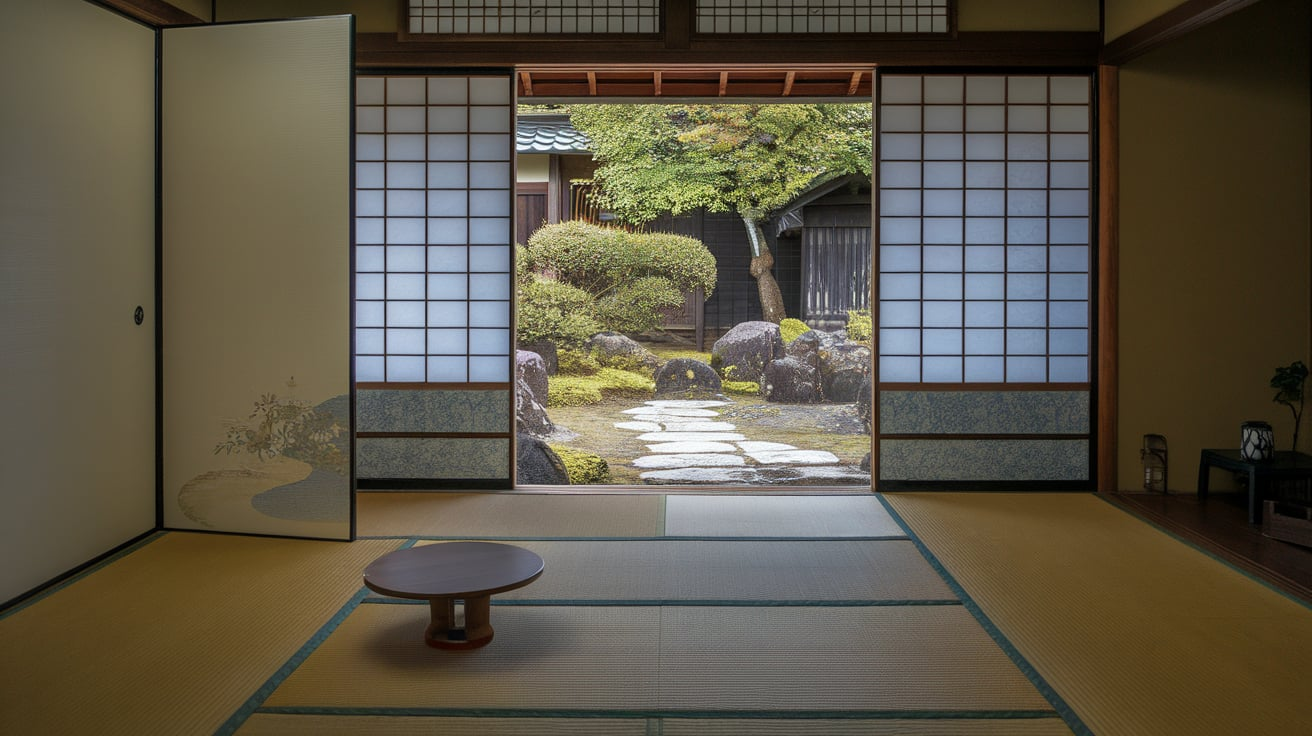
Designing a space that feels both functional and stylish is a challenge we all wrestle with.
One timeless solution that never seems to go out of style is the Japanese room divider.
These dividers, also known as shoji screens, are not just practical barriers—they are storytellers of culture, simplicity, and elegance.
Today, we’re diving into 20 Japanese room divider ideas that will transform your home into a sanctuary of beauty and smart space use.
1. Traditional Shoji Screen with Rice Paper
If you’ve ever seen a Japanese movie or anime set inside a tatami-style house, you’ve probably noticed the classic shoji screen.
These are wooden frames lined with translucent washi rice paper. They let light filter through softly, creating a warm, glowing ambiance.
The magic here lies in diffused light—instead of harsh sunlight flooding the room, the screen spreads it gently. This makes it perfect for bedrooms, meditation corners, or reading nooks.
I once used one in my own small studio apartment to separate the bed from the living area, and trust me, it felt like living in a Zen retreat instead of a shoebox.
2. Sliding Shoji Doors
Instead of folding dividers, Japanese homes often use sliding shoji doors. These glide along wooden tracks, saving space compared to traditional hinged doors. If you’re working with a tight apartment layout, these doors are lifesavers.
They don’t just divide rooms—they merge flexibility with beauty. You can slide them open to create one large space when guests come over, then close them for privacy when needed.
They’re especially popular in minimalist modern homes where every square foot counts.
3. Bamboo Room Divider
Nothing says “natural elegance” like bamboo. A bamboo divider can be freestanding or woven into panels, offering both durability and a rustic charm.
Fun fact: Bamboo grows up to 3 feet in just 24 hours under the right conditions, making it one of the most sustainable materials. If you’re into eco-friendly décor, this is a no-brainer. Bamboo dividers also bring a calming, earthy vibe that makes the space feel more connected to nature.
4. Carved Wooden Divider with Japanese Motifs
Want something that feels more artistic than minimalist? Go for a carved wooden divider. These feature intricate Japanese patterns—think cherry blossoms, waves, or even traditional latticework.
I once saw a friend use a hand-carved screen with a sakura blossom motif in her entryway, and it was such a conversation starter. It’s not just a divider; it’s functional artwork.
5. Minimalist Black Frame Divider
Sometimes simplicity is king. A black wooden frame with translucent white paper gives a bold contrast while keeping the spirit of Japanese design intact. This works well in modern interiors where you want that clean, crisp look without overcomplicating things.
Pair it with neutral walls and a few plants, and suddenly your room looks like a page straight out of an architecture magazine.
6. Floor-to-Ceiling Shoji Partition
If you’re looking to completely transform a room, consider a floor-to-ceiling shoji partition. This isn’t a moveable screen but a permanent divider, much like walls—but softer, lighter, and way more elegant.
It’s ideal for open-plan homes where you want separation without killing the flow of natural light. Think of it as building walls, but in a way that still makes your home feel open and airy.
7. Folding Accordion Divider
Portable and flexible, the folding accordion divider is a must-have if you’re someone who rearranges furniture every other month. These are easy to move around, fold up when not in use, and can be placed anywhere in the house.
They’re perfect for renters who want to add character without permanent changes. Plus, when folded, they take up barely any storage space.
8. Modern Glass and Wood Combination
If you want to give your space a contemporary twist, try a divider made with glass panels framed in wood. This keeps the Japanese style but adds a sleek, modern feel.
Frosted glass works particularly well—it provides privacy without making the room feel closed off. It’s also easier to clean than paper screens, which is a big bonus if you have kids or pets who love testing the limits of fragile materials.
9. Divider with Built-In Shelving
Why settle for just a divider when it can double as storage? Some Japanese-inspired dividers come with built-in shelves where you can display bonsai plants, books, or ceramics.
This is especially practical in small spaces where every piece of furniture needs to pull double duty. I once placed a divider shelf behind my sofa, and it instantly became a mini Zen display area that everyone admired.
10. Outdoor-Inspired Bamboo Curtain Divider
If you want something lighter than a solid screen, try a bamboo curtain divider. These are made of thin bamboo slats strung together, offering a semi-transparent separation.
They’re perfect for a breezy, casual vibe and work wonderfully in balconies or sunrooms. Imagine sipping green tea with sunlight trickling through bamboo strands—it feels like a retreat in Kyoto.
11. Shoji Divider with Colored Rice Paper
Traditionally, rice paper is white. But in modern designs, you can find colored or tinted rice paper panels. Adding soft hues like pastel blue, pale pink, or warm beige can make the divider pop while still keeping that Japanese elegance.
If your room feels too plain, this is a subtle way to inject personality without overwhelming the aesthetic.
12. Divider with Nature-Inspired Prints
Some dividers feature prints of Japanese landscapes—mount Fuji, koi fish, cherry blossoms, or bamboo forests. These printed designs turn the divider into a wall-sized artwork while still functioning as a room separator.
It’s like hanging a giant painting, but with added privacy perks. For nature lovers, this is one of the best choices.
13. Transparent Acrylic Divider with Japanese Patterns
For ultra-modern interiors, look at acrylic dividers etched with Japanese patterns. They combine traditional motifs with futuristic materials.
Acrylic is lightweight, durable, and easy to clean, making it perfect for homes with kids or high-traffic areas. You get the charm of Japanese design but with a sleek, polished edge.
14. Divider with Shoji-Inspired Sliding Windows
Some designers take inspiration from traditional Japanese windows and turn them into dividers. These sliding panels with smaller window-like frames create a unique architectural touch.
It’s especially beautiful in loft apartments where you want both openness and privacy. The grid-like design gives depth and structure to otherwise plain rooms.
15. Divider with Calligraphy Art
Japanese calligraphy (shodo) isn’t just writing—it’s a form of art. Imagine a divider where each panel is adorned with elegant black ink calligraphy on white rice paper.
Not only does it separate space, but it also feels like a cultural piece. If you’re someone who values both function and storytelling in design, this choice hits the jackpot.
16. Divider with Fabric Panels
Instead of rice paper, some dividers use fabric panels. These can be linen, silk, or cotton, often dyed in soft natural shades.
Fabric is more durable than paper, and it brings a warmer, cozier vibe. It’s also easier to replace or switch out seasonally if you like refreshing your décor often.
17. Divider with Built-In Lighting
Want to take things up a notch? Try a divider that doubles as a light source. Some modern shoji-inspired dividers come with built-in LED lighting behind translucent panels.
This creates a stunning ambient glow in the evening. It’s like having a giant lantern in your living room, setting the mood instantly for relaxation.
18. Divider with Asymmetrical Panels
Traditional dividers usually have uniform panels, but modern Japanese-inspired designs sometimes play with asymmetry. Uneven panel sizes or staggered grids add visual interest while still keeping the serene aesthetic.
If you’re tired of cookie-cutter décor, this gives your space a unique, custom feel.
19. Divider with Sliding Hidden Storage
One of the coolest innovations I’ve seen is a divider with hidden sliding compartments. Think of it as a secret storage wall where you can tuck away small items.
It’s perfect for tiny apartments where clutter builds up quickly. This design combines the Japanese value of minimalism with practicality.
20. Outdoor Garden Shoji Divider
Last but not least, let’s step outside. Shoji dividers aren’t limited to indoors—you can use weather-resistant versions in your garden or patio.
They create intimate outdoor seating areas, protect against wind, and look absolutely stunning when paired with lanterns and stone pathways. It’s like building your very own Japanese tea garden escape right at home.
Conclusion
Japanese room dividers aren’t just about splitting a room in half. They’re about creating harmony, privacy, and beauty all in one piece.
From traditional rice paper shoji screens to modern glass, bamboo, or even lit-up dividers, each design offers its own unique charm.
What I love most is their versatility—you can use them in apartments, houses, offices, and even outdoor spaces.
They solve practical problems like space division, light diffusion, and storage, while also serving as conversation-starting works of art.